Portfolio · Case study 05 / 09
Ear to Fret
Guitar tutor · Android + Python audio ML
Upload a song you own and get the guitar lesson: chords, tab, rhythm and tuning, worked out from the recording.
Loading the devices 0%
What it is
Ear to Fret turns a song you own into a private guitar lesson: chords, tab, rhythm and tuning, worked out from the recording. Then you practise it slowed down, section by section, with a tuner built in.
- Free: 3 songs a month, 60 s each
- Pro: 100 songs a month, full length, tab, rhythm and export (Google Play)
- In development: the server pipeline passes its tests; the app is being readied for launch
What you can do
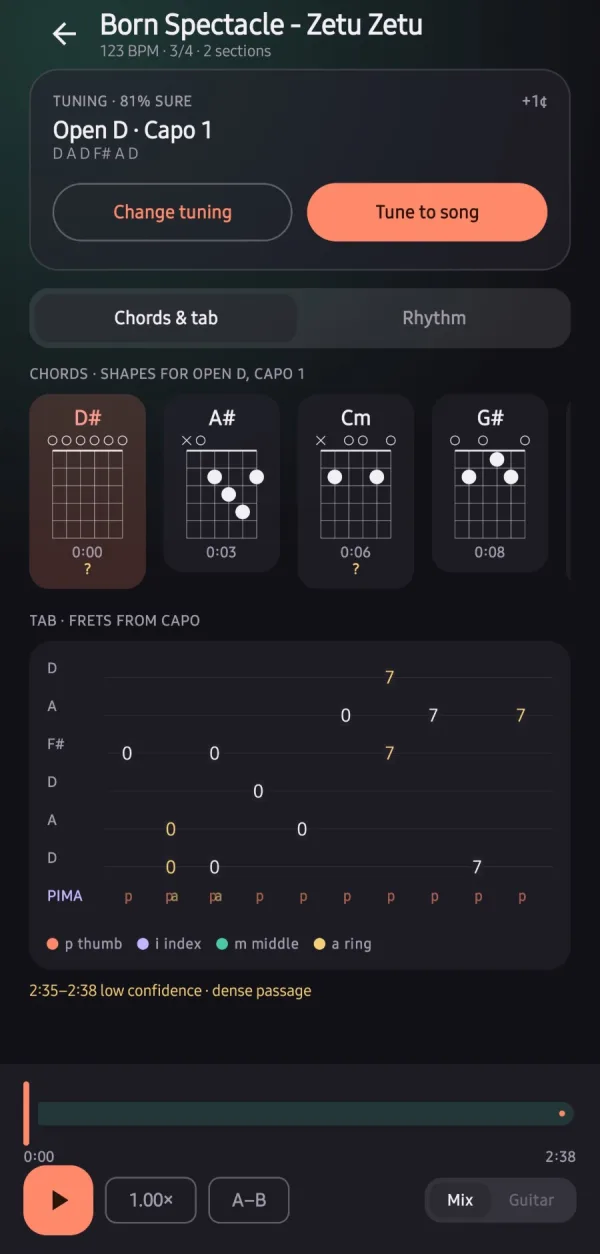
- 01Chord chartThe song's chords on a timeline.
- 02Tab with picking fingersNotes on the fretboard, with fingerpicking patterns such as p-i-m-a.
- 03RhythmStrum direction and tempo.
- 04Tuning and capoDetected for you (Drop D, for instance), and you can override it.
- 05Hear just the guitarThe guitar separated from the band, with a Mix/Guitar switch.
- 06Slow A–B loopRepeat a hard section at a speed you can manage.
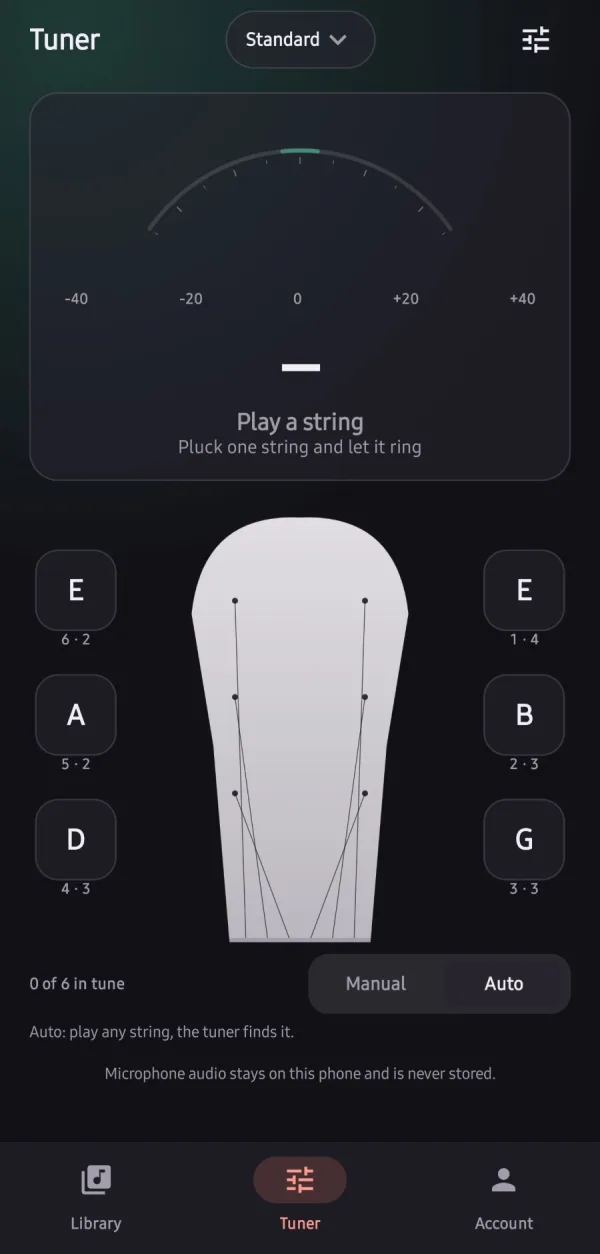
- 07Offline tunerChromatic or guided, on the phone; microphone audio never leaves it.
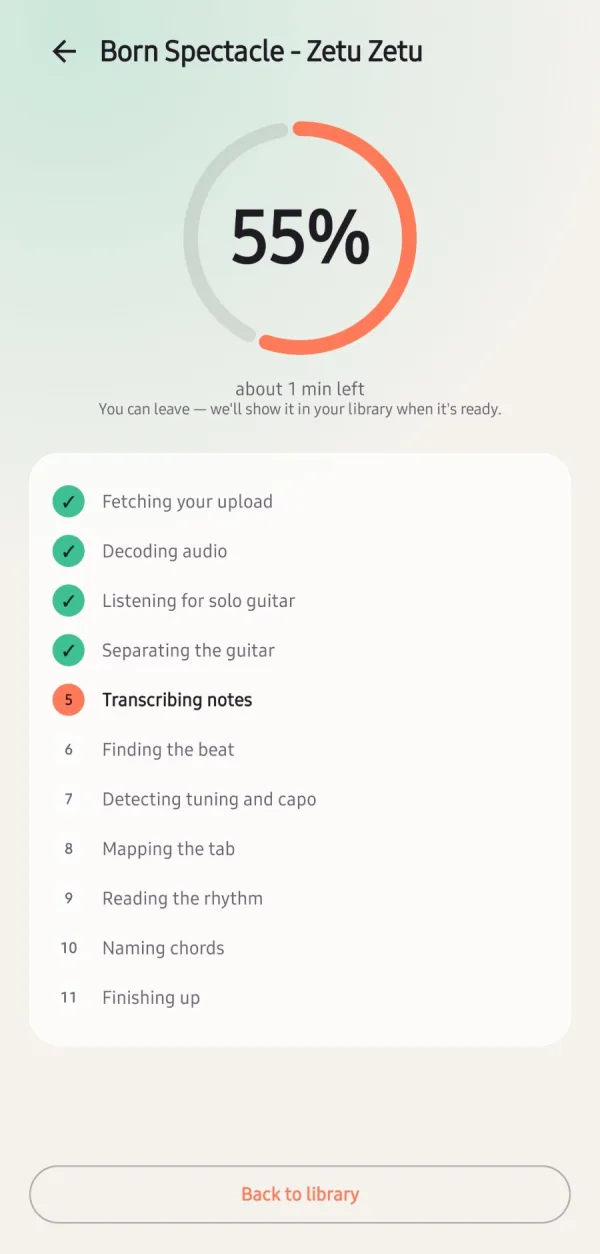
Upload a song you own. Get the guitar lesson.
Why it helps
- No more hunting for tabsThe lesson comes from the recording itself.
- Practise at your paceLoop the hard bar slowly until it's clean.
- PrivateUploads are deleted after 7 days by default, and you can delete your account in the app.
What I built
- A FastAPI service with a Redis queue and a worker that processes uploads
- An audio pipeline: Demucs separates the guitar, basic-pitch transcribes the notes, then chords, tab and tuning are worked out
- An Android app with slow-down, A–B looping and per-instrument mute
- An on-device tuner (YIN pitch detection), alternate tunings included
Stack
- Python
- FastAPI
- SQLAlchemy
- Alembic
- Redis
- RQ
- PyTorch
- Demucs
- basic-pitch (ONNX)
- librosa
- Docker
- Kotlin
- Jetpack Compose
- Media3
- Play Billing
The hard part
Problem
The transcription model officially needs TensorFlow, which has no build for the Python version the rest of the stack runs on.
What I did
The pipeline uses the model’s ONNX path, which never imports TensorFlow: the package is installed without its dependencies and its real runtime needs are pinned by hand, inside a locked Docker image.